
Cover photo: Kent Wang
When we think of the word “palace,” the image that probably comes to mind is that of a large, stately building surrounded by gardens and located on the outskirts of town. Let me tell you that the concept in this case is quite different—in fact, they’re called “Palace Houses.” They’re located in the city center but go unnoticed because of their austere facades, so if you’re not paying attention, you might walk right past them, because you’d never imagine that a true marvel is hidden within those walls.
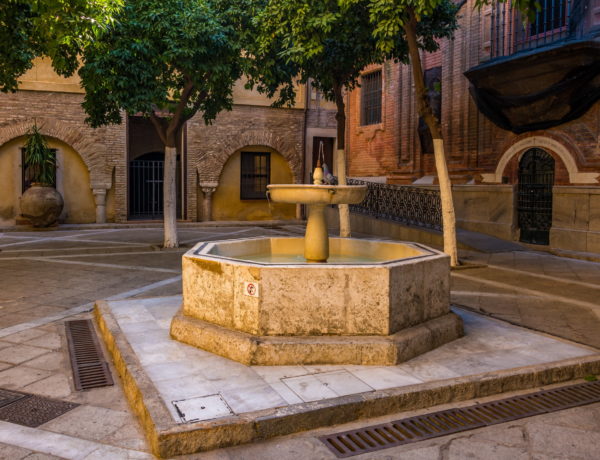
They are characterized above all by a large inner courtyard around which the rooms are arranged, a legacy of Roman and Muslim architecture. Most of them were built by the nobility or wealthy merchants during the era of the Port of the Indies.
Although here are just six—the most iconic ones—Seville is full of them, whether they’re shops, restaurants, hotels, or venues for rent for events.

Casa de Pilatos
Take the “Palacio Andaluz” as an example: a central porticoed courtyard, gardens, fountains, and abundant tilework. Commissioned by Catalina de Rivera, it was her son who gave it its distinctive Renaissance Mudejar architecture.
Open to the public; check prices and hours.
Photo: Flickr. Jeremy Thompson
Palacio de las Dueñas
If this palace is famous for anything, it is precisely for its former owner: the famous Duchess of Alba. It has only been open to the public for a few years, and it still belongs to the House of Alba. The poet Antonio Machado was born there.
Open to the public; check prices and hours.
Photo: Wikipedia


Casa de la Condesa de Lebrija
This palace also owes its name to its owner: the Countess of Lebrija. An archaeology enthusiast, Regla Manjón brought mosaics and artifacts from Italica in 1901 and restored her original 16th-century palace, adapting it to house the artifacts it contains.
Open to the public; check prices and hours.
Photo: Flickr. Sandra Vallaure
Casa de los Pinelo
The Pinelo family commissioned the construction of this Palace House in 1502 in this distinctive Sevillian Mudejar-Renaissance style. It is one of the few that has remained almost intact. Today, it serves as the headquarters of the Royal Academy of Letters of Seville and the Royal Academy of Fine Arts of Saint Elizabeth of Hungary.
Free dmission to the courtyard; please check the hours.
Photo: gavilansevilla


Casa Salinas
Another testament to Seville’s wealth in the 16th century. Purchased by a prominent family of merchants, the building has survived in good condition despite various trials and tribulations. The Salinas family has owned it since the early 20th century.
Open to the public; check prices and hours.
Photo: gavilansevilla
Palacio de los Marqueses de la Algaba
In fact, little remains of what this imposing palace once was; it has stood since the Middle Ages. It currently houses the Mudejar Center, so it’s worth a visit since it’s one of the few museums that’s free.
Free public building.
Photo: Wikipedia

Some of these palaces are part of the “Unknown Seville” tour, so if you’d like to learn more about them and many other interesting things, book your tour with me: