Saint Ferdinand (San Fernando)
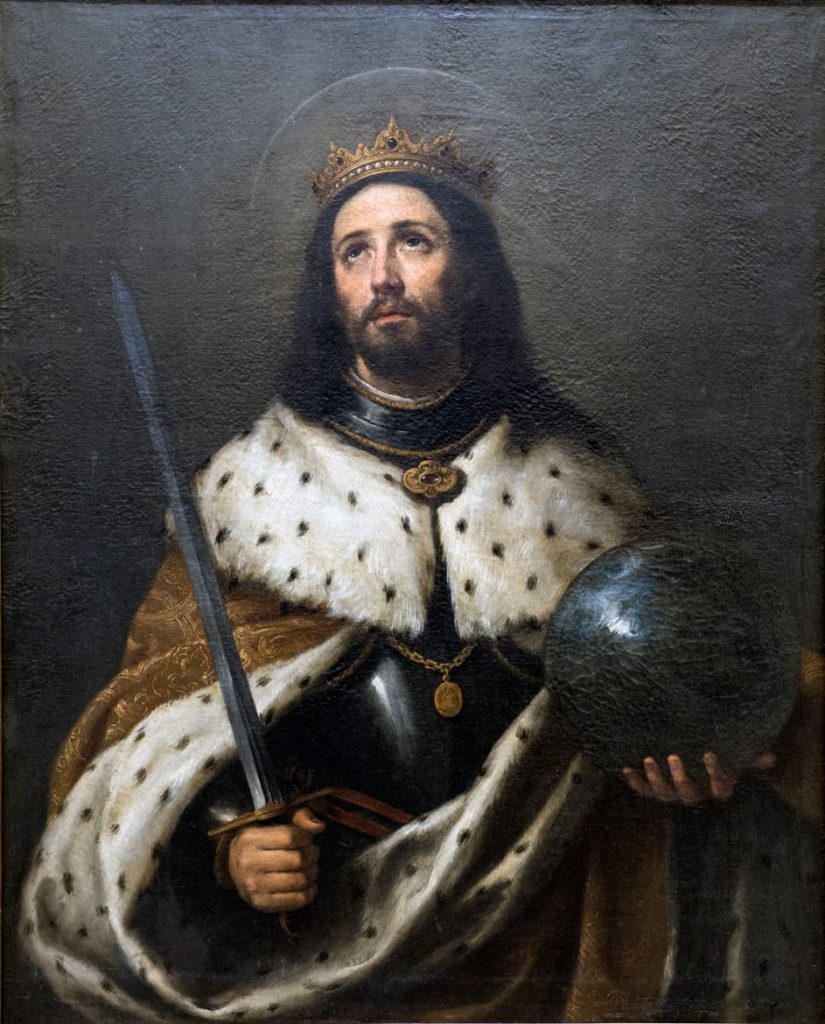
Ferdinand III the Saint conquered Seville in 1248, bringing an end to the Muslim period in the city. He died in Seville a few years later and was buried in the Cathedral. Centuries later, he was canonized, and thus became the patron saint of Seville. Every May 30, on Saint Ferdinand’s Day, his tomb is opened and his body is displayed to anyone who wishes to visit him and pay their respects.
Foto: Wikipedia
Virgin of the Monarchs
(Virgen de los Reyes)
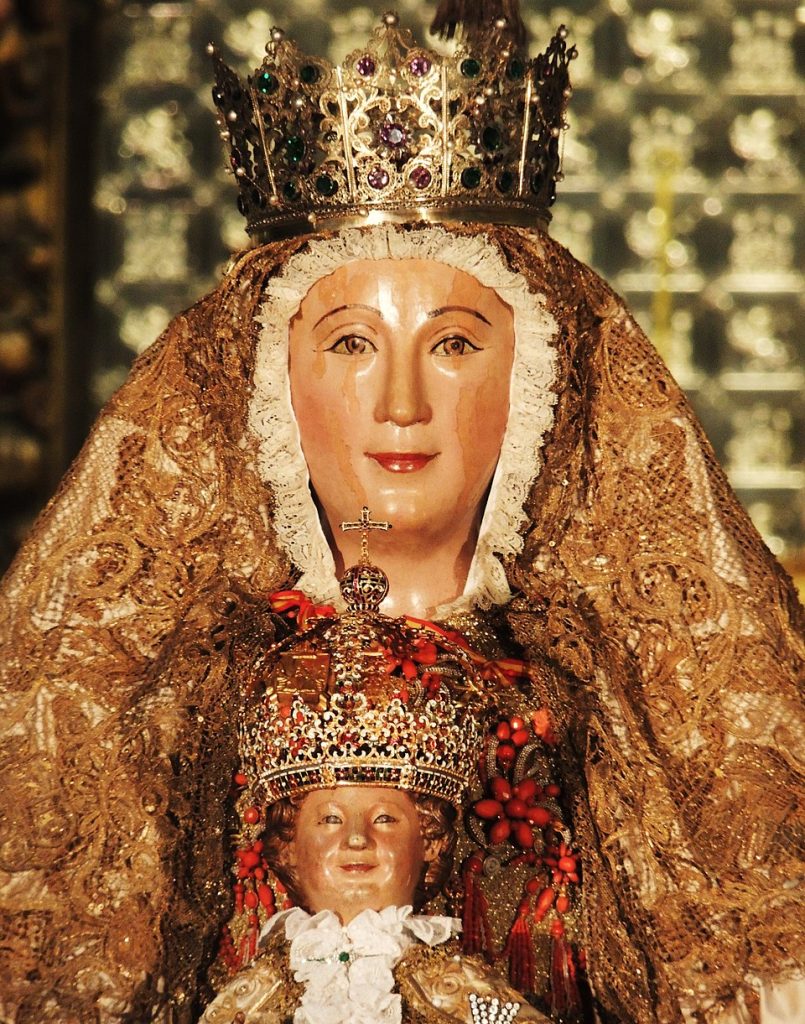
The Virgin of the Kings is probably the oldest devotion in Seville. The origins of this image of the Virgin Mary are a mixture of legend and reality, and its location continues to add to its aura of mystery, as it is displayed in the royal chapel of the Cathedral, which is always closed to visitors. Since 1946, she has been the patron saint of Seville and its archdiocese, and a procession is held on August 15, the Feast of the Assumption of the Virgin.
Foto: Wikipedia
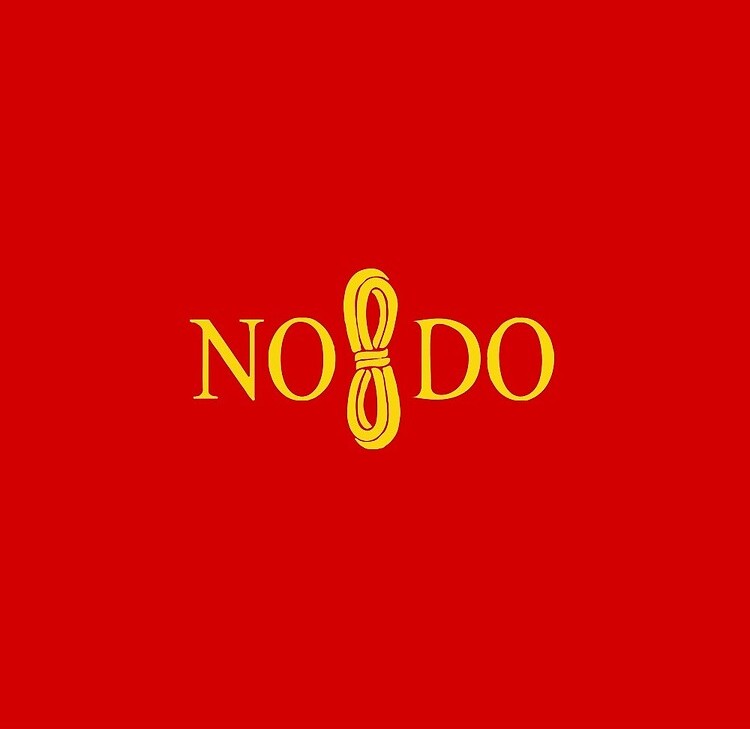
NO8DO
It’s not an 8; it’s a ball of yarn (madeja). It reads: “No-madeja-do.” It hasn’t abandoned me. These were the words Alfonso X spoke when Seville welcomed him with cheers in the midst of the civil war with his son Sancho. Seville hadn’t abandoned him. Seville was so proud of these words that they became the city’s emblem and can be seen everywhere, including as the symbol of City Hall.
Foto: Wikipedia
Saint Justa and Rufina
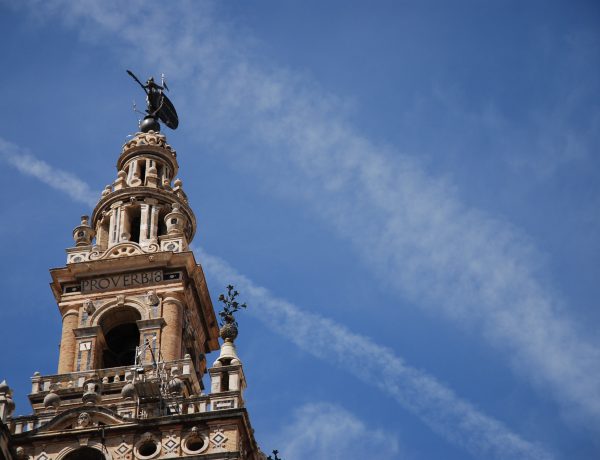
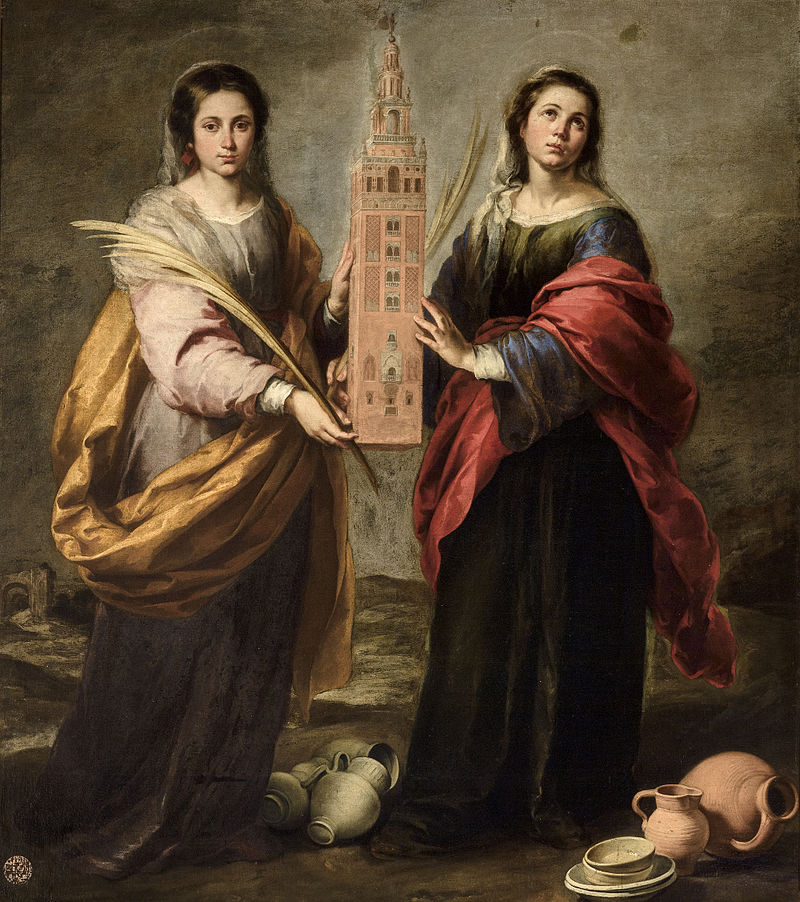
Legend has it that in Roman times, these two potter sisters from Triana were Christians and were therefore martyred and later canonized as saints. As co-patron saints and protectors of the city, it is said that during the 1504 earthquake, the Giralda nearly collapsed, but they descended from heaven and held it up. You’ll see them all over the city, always holding a palm frond and protecting the Giralda.
Foto: Wikipedia
Triana Pottery
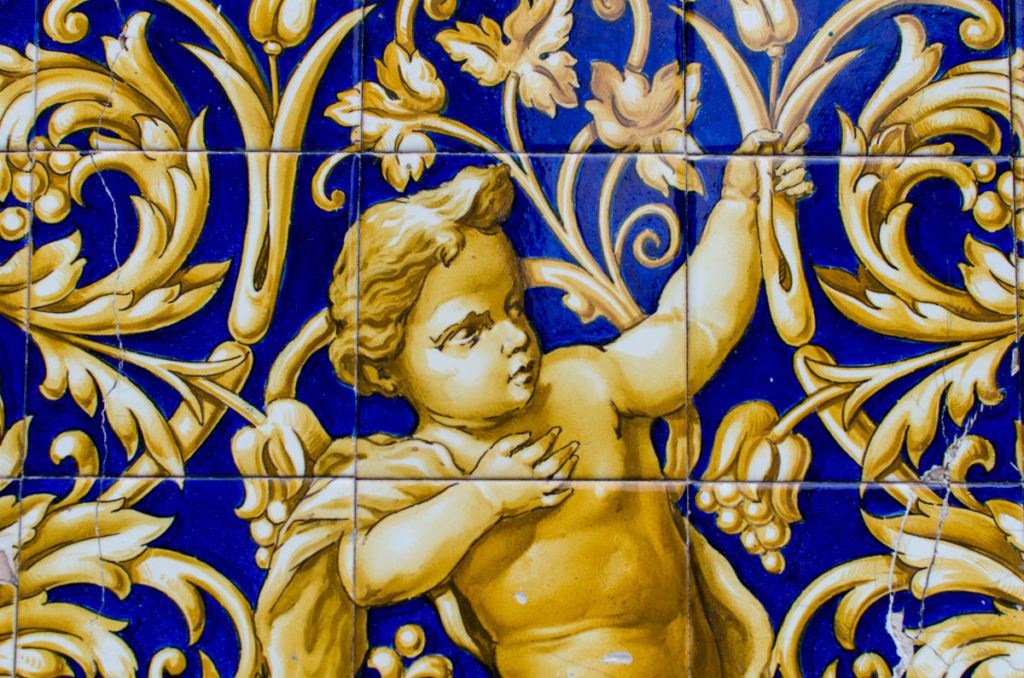
Triana has always been a neighborhood of artisans and sailors, among other trades. But if there’s one thing that defines the neighborhood, it’s undoubtedly its ceramics. With roots in Muslim tradition, this art form is here to stay, produced using a variety of techniques and in different forms. Without a doubt, the star of the show is the painted tile, which has adorned monuments since the 16th century. It is in Triana where you’ll find Spain’s first painted tile and the old ceramics factories.
Foto: Flickr. Sandra Vallaure
Operas in Seville
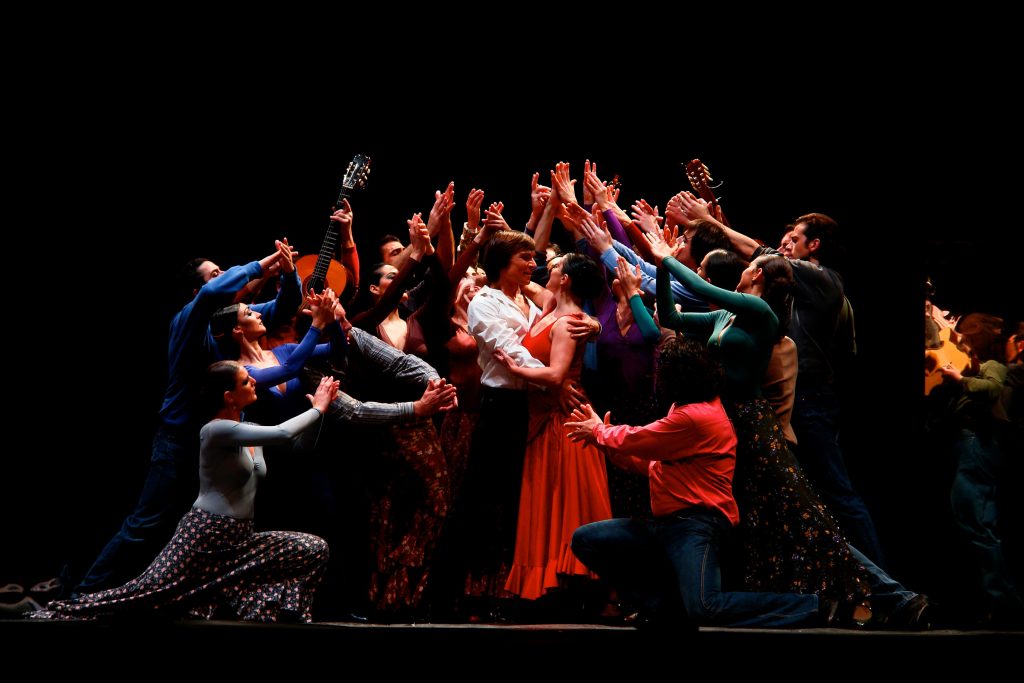
Did you know that Seville is the city with the most operas dedicated to it? And not only that, but of the three most frequently performed operas in the world, two are set in Seville: Carmen and The Marriage of Figaro. Throughout the city, you’ll see commemorative plaques reading “Seville, City of Opera,” and that’s because more than 150 operas are set in its streets. The Barber of Seville, Don Giovanni, and Carmen are among the most famous.
Foto: Wikipedia
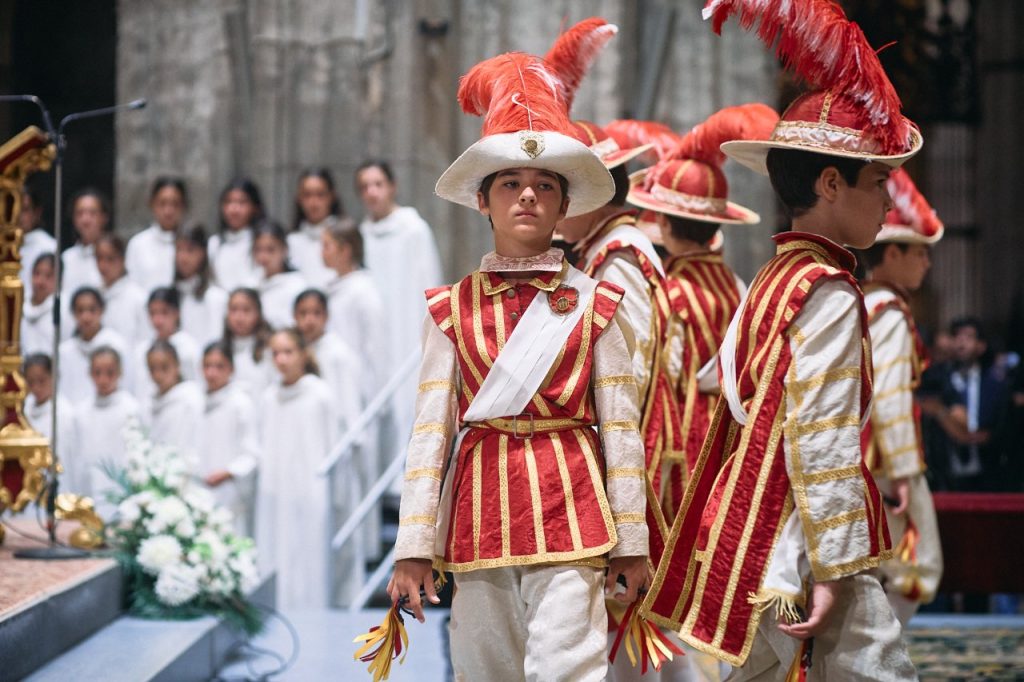
The Seises
In Seville, a group of children (originally six, hence their name) perform a special dance in the Cathedral on the feast days of Corpus Christi, the Immaculate Conception, and during the Carnival Triduum. These “seises” have been dancing since the 16th century, and their costumes are particularly striking. It remains an important tradition that Sevillians attend in droves.
Foto: Ayuntamiento de Sevilla, X
The Thursday Market (El Jueves)
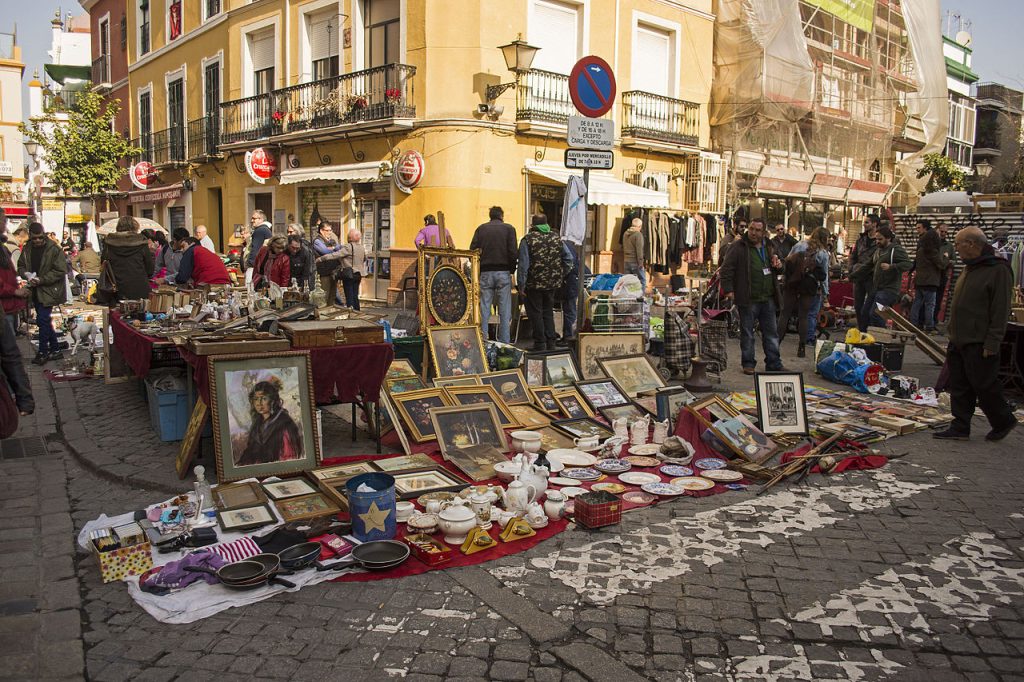
Without fail, every Thursday of every week of the year—except Holy Thursday—Calle Feria fills with antiques and secondhand goods. It is Seville’s oldest flea market, believed to date back to before the 13th century. Interestingly, the Carriazo Bronze—one of Tartessos’s best-known works, dating from the 7th century B.C.—was found here.
Foto: Wikipedia